Published: 11/01/2026
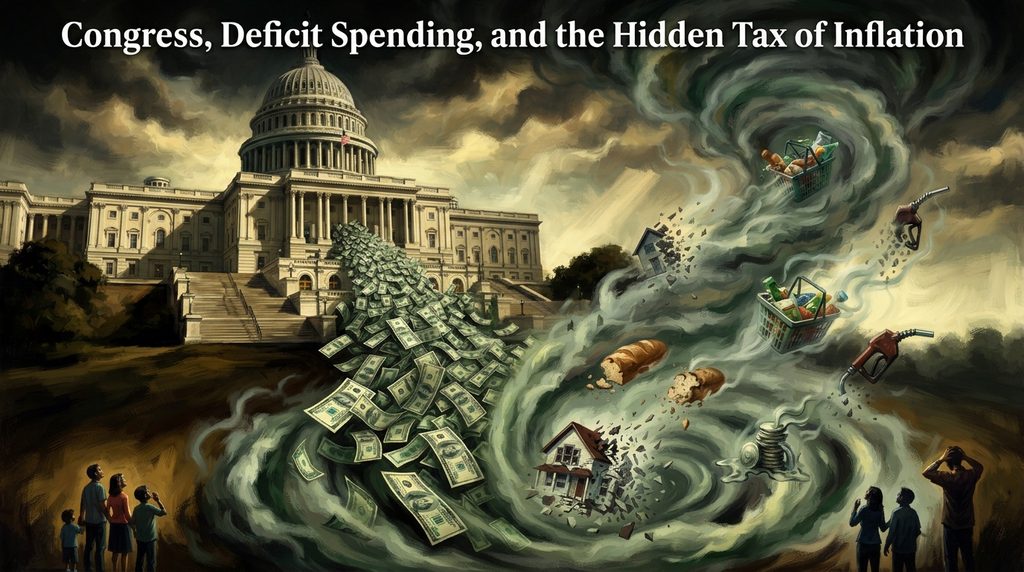
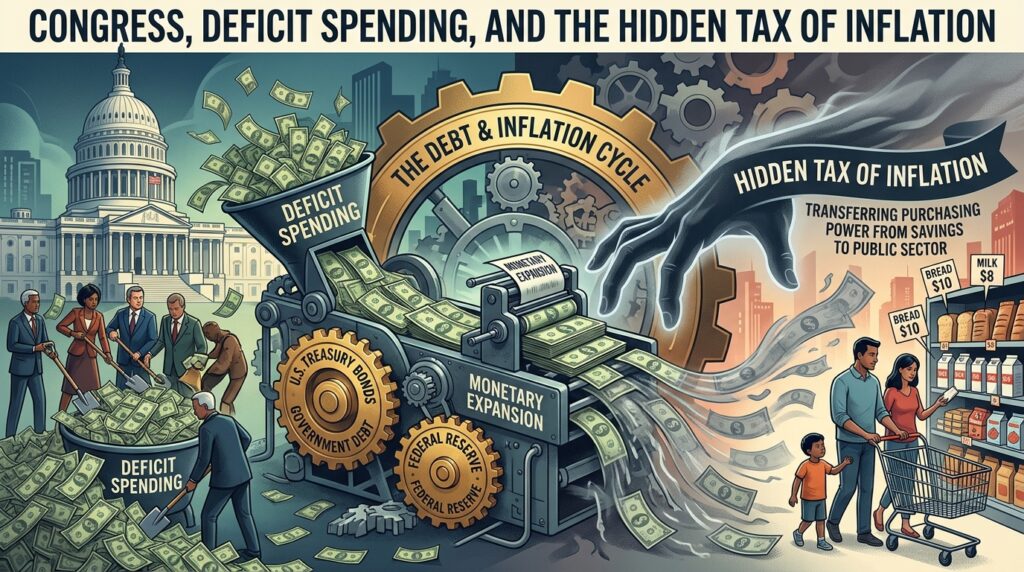
Congress regularly engages in deficit spending—a practice that, in plain terms, means the federal government spends more money than it collects in tax revenues. To cover these shortfalls, the U.S. Treasury issues government debt, selling bonds to public investors, corporations, and foreign nations through open auctions. While the Federal Reserve does not fund the government directly, its management of systemic liquidity—particularly when it purchases government bonds on the secondary market—expands the broader money supply. When this monetary expansion outpaces the economy’s real production of goods and services, it strains the basic laws of scarcity, causing the purchasing power of each dollar to diminish.
Economists frequently refer to the resulting inflation as an indirect tax. When the government funds structural budget shortfalls through persistent borrowing and monetary expansion, it dilutes the value of existing currency. This process effectively transfers real purchasing power away from household savings and into the public sector. While short-term price fluctuations can be triggered by sudden supply-chain shocks or volatile global commodity markets, prolonged fiscal deficits combined with accommodative monetary policy remain a principal engine of sustained, long-term inflation and the rising cost of living.
Halting this cycle requires compelling Congress to live within its financial means. Reining in fiscal excess demands structural adjustments, including balanced budgets, an end to unchecked deficit spending, and a deliberate, long-term plan to address the mounting national debt. Achieving this structural stability will inevitably require painful spending adjustments after decades of operating without rigid fiscal boundaries.
Blame for this fiscal trajectory rests clearly on both major political parties. Rather than pointing fingers across the aisle, Congress must unite around comprehensive fiscal reform. Historically, statutory debt increases and structural deficits have occurred under unified and divided governments alike. Neither party has demonstrated a sustained willingness to curb spending or address revenue mismatches, opting instead to defer difficult decisions while eroding the long-term stability of the American dollar.
The remedy is clear, and delaying its implementation only compounds the financial burden inherited by future generations. The primary challenge remains political, rather than economic: how do we compel elected officials to prioritize the nation’s long-term economic stability over short-term political gain?