
Published: 08/21/2026
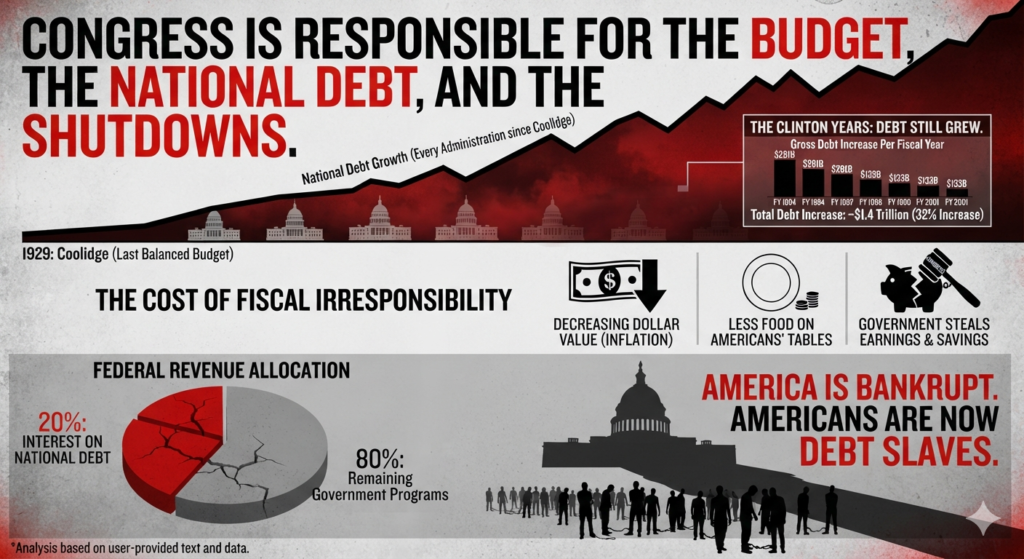
The last administration that was fiscally responsible was Calvin Coolidge’s, and Coolidge left office in 1929. Congress has grown the national debt during EVERY administration since that time. Until Congress balances the budgets, ends deficit spending, and makes headway on the national debt, the dollar will continue to decrease in value due to inflation. This means that aside from short-term market manipulation, there will be continued price increases and less food on the tables of Americans as the government steals ever-increasing portions of our earnings AND SAVINGS.
Congress, which includes the House and Senate but not the office of the president, owns the job of managing finances in this country. Sadly, many congressmen and senators, regardless of party affiliation, seem to prioritize their personal power and wealth over the health of—if not at the cost of—this country.
America is bankrupt; approximately one-fifth of all revenues taken in by the federal government are now exhausted just paying the INTEREST on the national debt. The Federal Reserve must even keep interest rates artificially low because the federal government cannot afford to make interest payments on the national debt if interest rates increase.
If the dollar is to survive at all—and it is possible that the United States has already passed the fiscal tipping point—hard choices will have to be made, to include significant cuts to many federal government programs. Sadly, and realistically, the dollar will collapse entirely before Congress adopts fiscal responsibility. That is one of the primary reasons so many foreign entities are now dumping the dollar, buying up gold, and searching for alternatives such as BRICS.
There are two ways to conquer a country: one is by the sword, the other is through debt; and Americans are now debt slaves.
Now, before people chime in with false claims of fiscal responsibility during the Clinton administration—and they always do—the gross national debt grew during that administration as well. During President Clinton’s administration, the gross national debt increased by almost $1.4 trillion (adjusted for inflation, this is between $2.5 and $3 trillion in today’s dollars), almost a 32% increase from the $4.4 trillion debt at the end of President H.W. Bush’s last budget.
Gross Debt Increase Per Fiscal Year:
- FY 2001: $133 billion
- FY 2000: $18 billion
- FY 1999: $130 billion
- FY 1998: $113 billion
- FY 1997: $189 billion
- FY 1996: $251 billion
- FY 1995: $281 billion
- FY 1994: $281 billion